
Forklift Safety Barriers Explained: Why Modern Warehouses Can’t Afford to Ignore Impact Protection Products
In modern logistics, warehousing, and manufacturing environments, forklifts are indispensable. We cannot operate without them. They are work horses, they keep products moving, maximise operational efficiency, and allow businesses to handle increasing volumes of goods with speed and efficiency.
However, alongside their operational benefits comes a serious workplace safety challenge.
Forklifts remain one of the leading causes of accidents in industrial facilities worldwide. Even at relatively low speeds, collisions involving forklifts can result in severe injuries, costly infrastructure damage, downtime, and long-term operational disruption.
As warehouses become busier and more space-conscious, the need for effective separation between vehicles, pedestrians, and critical infrastructure has never been greater.
This is where forklift safety barriers play a crucial role.
From protecting warehouse racking and production lines to safeguarding pedestrian walkways and loading bays, modern forklift protection systems have become a fundamental part of industrial safety planning.
At Rayflex Group our customers tell us that there is growing recognition that warehouse safety is no longer simply about compliance. It is about creating resilient, efficient, and future-ready industrial environments where people, equipment, and operations are protected from avoidable impact damage.
What Are Forklift Safety Barriers?
Forklift safety barriers are physical protection systems designed to separate moving industrial vehicles from pedestrians, equipment, storage systems, and vulnerable infrastructure.
Installed throughout warehouses, logistics hubs, manufacturing facilities, and distribution centres, these barriers help reduce the likelihood and severity of collisions.
Their purpose is straightforward: create safer operational zones and minimise the risks associated with forklift traffic.
Modern warehouse safety barriers are commonly used to:
- Prevent forklift collisions
- Protect employees and visitors
- Reduce damage to infrastructure
- Improve traffic management
- Define operational areas
- Protect racking systems and machinery
- Support workplace safety compliance
- Minimise repair and maintenance costs
Industrial safety barriers are now considered essential in environments where forklifts, pallet trucks, and other materials handling equipment operate close to pedestrians or valuable assets.
Why Forklift Safety Barriers Matter More Than Ever
Warehouses today are under pressure to move more products faster than ever before.
The rapid growth of e-commerce, tighter delivery schedules, and increasing automation mean many industrial environments are operating with:
- Higher forklift traffic volumes
- Narrower aisles
- Faster operational turnaround
- Increased pedestrian activity
- Greater storage density
While efficiency has improved, the risks have also intensified.
A single forklift collision can cause:
- Serious employee injuries
- Structural damage
- Product loss
- Operational downtime
- Racking collapse
- Equipment failure
- Insurance claims
- Expensive repairs
Even minor impacts can weaken infrastructure over time, creating hidden long-term safety risks.
In many facilities, forklift damage is often treated as an unavoidable operational cost. In reality, much of this damage is preventable with properly designed forklift protection systems.
This is one of the biggest shifts taking place across modern warehouse safety strategy.
Businesses are increasingly moving away from reactive repairs and toward proactive impact protection.
The Different Types of Forklift Safety Barriers
Not all industrial safety barriers serve the same purpose.
Different environments require different levels of protection depending on traffic flow, impact risk, pedestrian exposure, and operational layout.
Pedestrian barriers are designed to separate people from moving forklift traffic.
These barriers are commonly installed around:
- Walkways
- Staff access routes
- Warehouse entrances
- Production lines
- Assembly areas
- Packing stations
Creating clear physical separation significantly reduces the risk of pedestrian impact accidents.
In busy warehouses, visual markings alone are rarely enough. Physical warehouse safety barriers provide a much stronger level of protection and help reinforce safer operator behaviour.
Warehouse racking is particularly vulnerable to forklift damage.
Even small impacts can compromise the structural integrity of storage systems.
Racking protection barriers help shield:
- Uprights
- End-of-aisle racking
- Storage legs
- Shelving systems
- Picking areas
Protecting racking infrastructure is critical because structural damage may not always be immediately visible.
Over time, repeated impacts can increase the risk of collapse, product loss, and serious injury.
Machine and Equipment Protection
Industrial facilities often contain expensive automated systems, machinery, conveyor systems, and electrical equipment.
Forklift barriers are commonly used to protect:
- Conveyor systems
- Control panels
- Production equipment
- Robotics systems
- Charging stations
- Automation zones
The cost of equipment downtime often far exceeds the cost of installing effective industrial safety barriers.
Loading bays represent some of the highest-risk areas in any logistics operation.
Constant vehicle movement, reversing operations, and heavy forklift activity create significant collision hazards.
Forklift protection systems around loading bays help reduce:
- Vehicle impact damage
- Dock edge collisions
- Pedestrian exposure
- Trailer movement risks
Effective loading bay protection also supports smoother traffic flow and operational organisation.
Steel Barriers vs Rubber Impact Barriers
One of the most important considerations when selecting forklift safety barriers is the barrier material itself.
Historically, steel barriers dominated industrial environments because they offered visible physical protection.
However, many facilities are now adopting rubber impact barriers and polymer-based protection systems instead.
Why?
Because modern industrial environments require more than simple rigidity.
The Limitations of Traditional Steel Barriers
Steel barriers are strong, but they often transfer impact energy directly back into the floor anchors, forklifts, or surrounding infrastructure.
This can lead to:
- Floor damage
- Cracked concrete
- Barrier deformation
- Vehicle damage
- Higher maintenance costs
After repeated impacts, steel systems frequently require repair or replacement.
In some situations, rigid barriers may even increase repair costs by transferring force into nearby structures.
The Advantages of Rubber Impact Barriers
Rubber impact barriers and flexible polymer systems are designed to absorb and dissipate impact energy.
This flexibility provides several operational advantages:
- Reduced damage during collisions
- Lower maintenance requirements
- Improved barrier lifespan
- Reduced floor anchor stress
- Better energy absorption
- Lower repair costs
Flexible barriers can often withstand repeated impacts without permanent structural damage.
This makes them especially effective in high-traffic warehouse environments.
At Rayflex Group we focus and specialise in impact-absorbing barrier technologies that improve long-term durability while reducing operational disruption.
For many facilities, rubber impact barriers now represent a smarter long-term investment compared with traditional rigid systems.
Combining Forklift Safety Barriers with PVC Strip Curtains
While forklift safety barriers provide critical physical impact protection, many modern warehouses are now combining them with PVC strip curtains to create more controlled, efficient, and safer operational environments.
PVC strip curtains are commonly installed in areas where forklifts and pedestrians move between zones, including:
- Warehouse doorways
- Temperature-controlled areas
- Loading bays
- Internal traffic routes
- Production entrances
- High-traffic operational zones
Used alongside forklift safety barriers, PVC strip curtains help improve both safety and environmental control.
Improving Visibility and Traffic Awareness
Transparent PVC strip curtains allow forklift operators and pedestrians to maintain visibility when moving between warehouse zones.
This can help reduce blind spot risks around:
- Door openings
- Internal access points
- Busy loading areas
- Cross-traffic routes
When combined with clearly defined warehouse safety barriers and bollards, PVC curtains help create more organised and predictable traffic movement throughout industrial facilities.
Supporting Pedestrian Segregation
Physical separation is one of the most effective ways to reduce forklift-related accidents. Rayflex manufactures PVC from various colours to denote hazards and to segregate areas.
Forklift safety barriers establish protected pedestrian walkways, while PVC strip curtains help guide movement through designated entry and exit points.
Together, these systems support:
- Safer pedestrian access – use of colours to highlight areas
- Controlled traffic flow – use colours to show in / out points
- Reduced crossover between people and vehicles – ensure no access in specific areas
- Better operational organisation
Protecting Temperature-Controlled Areas
Many warehouses use PVC strip curtains to maintain internal temperatures in chilled, cold storage, or temperature-sensitive production areas.
In these environments, forklift protection systems can help prevent accidental impacts to door frames, refrigerated entrances, and surrounding infrastructure.
Combining rubber impact barriers with PVC strip curtains helps facilities:
- Reduce damage around busy doorways
- Improve energy efficiency
- Maintain temperature separation
- Protect high-traffic access points
Reducing Operational Downtime
Forklift collisions around doorways and warehouse entrances can result in repeated repair costs and operational disruption.
Installing forklift safety barriers around PVC strip curtain openings helps protect:
- Door frames
- Curtain mounting systems
- Warehouse entrances
- Loading bay structures
This integrated approach reduces maintenance requirements while extending the lifespan of both the barriers and curtain systems.
At Rayflex, we look to integrated warehouse safety solutions that combine impact protection with environmental control, traffic management, and operational efficiency.
Rather than treating warehouse infrastructure as separate systems, more facilities are adopting joined-up approaches that improve safety, durability, and workflow simultaneously. We are a one stop shop for PVC and rubber site safety products.
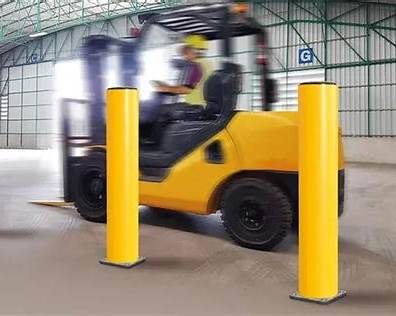
Where Forklift Safety Barriers Should Be Installed
One of the biggest mistakes businesses make is treating forklift safety barriers as isolated protection products rather than part of a wider warehouse safety strategy.
Effective barrier placement requires understanding traffic patterns, operational risks, and vulnerable areas throughout the facility.
Key locations typically include:
Warehouse Walkways
Pedestrian routes should always be physically separated from forklift traffic wherever possible.
Racking Aisles
Racking ends and aisle corners are highly vulnerable to forklift strikes.
Loading Bays
High traffic density makes loading areas a priority for impact protection.
Production Zones
Manufacturing lines and equipment areas require separation from vehicle movement.
Doorways and Access Points
Forklift collisions frequently occur around blind corners and warehouse entrances.
Charging Areas
Battery charging stations and electrical infrastructure require protection from accidental impact.
Automation Systems
Automated systems and robotics infrastructure often involve significant investment and require dedicated impact protection.
The most effective forklift protection systems are integrated into overall warehouse layout planning rather than added reactively after accidents occur.
The Financial Impact of Forklift Damage
Its easy to not consider or underestimate the true cost of forklift collisions in your premises.
The visible repair bill is often only a fraction of the overall operational impact.
Indirect costs can include:
- Downtime
- Delayed shipments
- Lost productivity
- Damaged stock
- Insurance increases
- Health and safety investigations
- Labour disruption
- Replacement equipment costs
A damaged racking upright or conveyor system can quickly escalate into a major operational issue.
This is why warehouse safety barriers should not simply be viewed as a compliance expense.
They are an operational protection investment.
Forward-thinking facilities increasingly understand that prevention is significantly more cost-effective than repeated repairs and disruption.
Compliance and Workplace Safety Standards
Industrial employers have a legal responsibility to protect workers and maintain safe operating environments.
In the UK, warehouse operators must comply with health and safety regulations relating to workplace transport risks and pedestrian protection.
Forklift safety barriers help businesses demonstrate proactive safety management by:
- Reducing collision exposure
- Improving workplace organisation
- Supporting traffic segregation
- Protecting vulnerable infrastructure
- Enhancing operational visibility
While barriers alone do not guarantee compliance, they form an important part of wider workplace safety systems.
Combined with operator training, clear signage, and effective traffic management, industrial safety barriers contribute to significantly safer environments.
Why Modern Warehouses Are Investing More in Safety Infrastructure
Warehouse safety is changing. Warehouses look and feel safer than ever. Historically, many businesses focused primarily on productivity and throughput and neglected the buildings. Today, there is growing recognition that safety and efficiency are linked.
Well-designed warehouse environments tend to experience:
- Fewer accidents
- Less downtime
- Lower repair costs
- Better workflow organisation
- Improved employee confidence
- Reduced operational disruption
As automation and logistics demands continue to evolve, industrial facilities are becoming increasingly reliant on durable infrastructure protection.
This is particularly true in high-volume environments where forklifts operate continuously throughout the day.
Businesses are now prioritising:
- Flexible impact protection
- Long-term durability
- Low-maintenance barrier systems
- Pedestrian segregation
- Infrastructure resilience
The goal is no longer simply to react after accidents happen.
It is to build facilities that are designed to minimise risk from the outset.
Rayflex think this shift reflects a broader industry movement toward smarter, more sustainable industrial safety solutions that protect both operations and people. Safety solutions do have to be high tech – most industries do not require this – but they do have serve a long-term purpose and protect you, your business, and your workers.
Choosing the Right Forklift Protection Systems
Every warehouse operates differently.
The ideal forklift safety barrier solution depends on several factors, including:
- Forklift traffic volume
- Vehicle speed
- Warehouse layout
- Pedestrian exposure
- Impact risk level
- Environmental conditions
- Operational priorities
When selecting warehouse safety barriers, businesses should consider:
Impact Resistance
Can the barrier withstand repeated forklift collisions?
Flexibility
Does the system absorb energy or transfer impact force?
Visibility
Are barriers highly visible to operators and pedestrians?
Maintenance Requirements
How often will repairs or replacements be needed?
Installation Environment
Is the barrier suitable for indoor, outdoor, or temperature-controlled facilities?
Long-Term Cost Efficiency
Will the system reduce future operational and repair costs?
Choosing the cheapest barrier system upfront often proves more expensive over time.
Durability, adaptability, and impact absorption are becoming increasingly important in modern industrial safety planning.
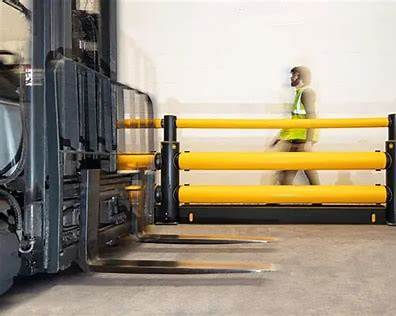
The Future of Warehouse Impact Protection
As warehouses continue evolving toward automation, higher throughput, and more complex logistics operations, forklift safety barriers will become even more important.
Future-focused facilities are increasingly adopting integrated safety strategies that combine:
- Traffic segregation
- Smart warehouse design
- Flexible barrier systems
- Automation safety zones
- Pedestrian protection
- Infrastructure resilience
The modern warehouse is no longer simply a storage space.
It is a highly dynamic operational environment where safety infrastructure directly influences productivity, reliability, and long-term business performance.
Forklift protection systems are now recognised as a critical component of that infrastructure.
Conclusion
Forklift safety barriers play a vital role in protecting people, infrastructure, equipment, and operations across warehouses, logistics hubs, and industrial facilities.
As forklift traffic volumes continue increasing, the risks associated with workplace transport also rise.
Effective warehouse safety barriers help businesses reduce collisions, minimise operational disruption, protect racking systems, and create safer working environments.
Whether protecting pedestrian walkways, loading bays, production equipment, or storage infrastructure, modern forklift protection systems are no longer optional additions — they are essential operational safeguards.
With growing industry demand for flexible, durable, and impact-absorbing protection systems, businesses are increasingly recognising the long-term value of proactive safety infrastructure.
Rayflex understands that industrial safety solutions reflect a wider industry understanding that protecting people and operations is fundamental to sustainable warehouse performance.
In today’s fast-moving industrial environments, investing in effective forklift safety barriers is not simply about compliance.
It is about building safer, more resilient, and more efficient workplaces for the future.