
Common Types of Forklift Safety Barriers
-
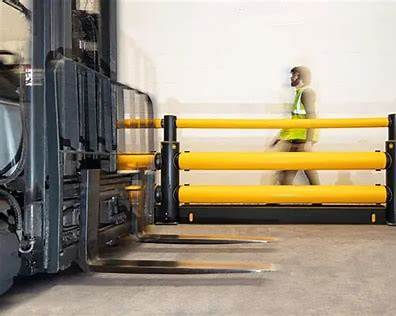
Pedestrian Safety Barriers
These barriers create protected walkways for employees working near forklift routes.
Benefits include:
- Clear pedestrian separation
- Improved traffic awareness
- Reduced collision risk
- Better operational organisation
-
Rack Protection Barriers
Warehouse racking systems are vulnerable to forklift impact damage.
Rack protection systems help:
- Prevent structural damage
- Reduce repair costs
- Improve storage safety
- Protect inventory
-
Flexible Impact Barriers
Flexible barriers absorb impact energy during collisions.
Advantages include:
- Reduced damage during impact
- Lower maintenance costs
- Improved durability
- Better long-term performance
Rubber and polymer barrier systems are commonly used for this purpose.
Rayflex provides industrial Rubber Products and Site Safety Products designed to absorb impact and protect high-traffic industrial environments.
-
Corner Protection Systems
Warehouse corners and structural columns are high-risk impact zones.
Corner guards help protect:
- Building infrastructure
- Vehicles
- Equipment
- Pedestrian areas
-
Loading Bay Protection
Loading bays experience constant vehicle movement and impact risk.
Barrier systems in these areas improve:
- Dock safety
- Vehicle guidance
- Impact protection
- Traffic organisation
Key Benefits of Forklift Safety Barriers
Improved Employee Safety
The primary benefit of forklift barriers is reducing the likelihood of pedestrian injury.
Reduced Infrastructure Damage
Barrier systems help protect:
- Walls
- Doors
- Racking
- Machinery
- Structural columns
Lower Operational Costs
Reducing collisions helps minimise:
- Repair expenses
- Product damage
- Downtime
- Insurance costs
Better Traffic Management
Clearly defined traffic routes improve workplace organisation and operational efficiency.
Increased Safety Compliance
Barrier systems support safer working environments and demonstrate proactive safety management.
Where Should Forklift Barriers Be Installed?
Key installation areas include:
- Warehouse intersections
- Pedestrian walkways
- Loading bays
- Racking systems
- Machinery zones
- Packing areas
- Doorways
- High-traffic operational routes
A workplace risk assessment can help identify the highest priority protection zones.
Choosing the Right Forklift Barrier System
Selecting the right barrier depends on:
- Vehicle traffic levels
- Impact risk
- Operational layout
- Pedestrian movement
- Environmental conditions
- Required durability
Industrial rubber safety barriers and flexible impact systems are often preferred in high-traffic areas due to their durability and shock-absorbing properties.
For demanding warehouse operations, Rayflex also manufactures durable Heavy Duty PVC Strip Curtains that help separate operational zones and improve traffic management.
Additional Warehouse Safety Measures
Forklift barriers work best alongside broader safety systems such as:
- Floor markings
- Speed control measures
- Safety mirrors
- Warning signage
- Employee training
- Traffic management procedures
Combining multiple safety strategies creates a more effective workplace protection system.
Conclusion
Forklift safety barriers play a critical role in reducing workplace accidents and improving industrial safety.
By separating pedestrians from vehicles, protecting infrastructure, and improving operational organisation, these systems help businesses create safer and more efficient working environments.
Investing in forklift protection systems is not only about compliance — it is a practical long-term strategy for reducing costs, protecting employees, and supporting smoother industrial operations.